Rethinking the way we learn is becoming a key issue. Traditional training courses are no longer always sufficient to meet the needs of learners, particularly those from vulnerable socio-economic backgrounds, or the demands of modern labor markets. Between face-to-face, hybrid learning, and virtual environments, learning formats are multiplying and offering new opportunities to stimulate engagement, develop skills, and promote inclusion.
This article explores the different learning formats, their strengths and limitations, and how they can be evaluated and optimized to create truly effective learning paths. We will also see how concrete projects, such as DIAMOND, or innovative initiatives in higher education, such as those led by Junia with immersive and collaborative technologies, illustrate how pedagogy can be transformed to better support all learners on their path to success.
Learning, skills, and employability: a balance to be rethought

Learning is no longer simply a transfer of knowledge. The challenges of learning are numerous and crucial. Today, it is about preparing individuals to adapt quickly, solve new problems, collaborate effectively, and remain engaged throughout their professional and personal lives.
Among these challenges, we can identify:
- Learner attention and motivation: As we know, our environment is saturated with information and distractions. Capturing and maintaining attention is therefore a major challenge. Learning must therefore be designed to be engaging, interactive, and relevant in order to avoid passivity and encourage curiosity.
- The development of cross-disciplinary skills: Beyond technical expertise, soft skills (communication, critical thinking, collaboration) are becoming increasingly important. Teaching methods must encourage these skills in order to prepare students for the realities of teamwork and creative problem solving.
- Diversity of profiles and needs: Learners are not homogeneous. They have different learning rhythms, styles, and contexts. The challenge is to offer flexible and adaptive formats that respect this diversity.
- The digitization and hybridization of learning: The integration of digital tools is profoundly changing the way we teach and learn. Finding the right balance between leveraging these technologies and preserving the human aspect is key.
- Measuring educational impact: It is essential to evaluate not only satisfaction or immediate learning outcomes, but also the real impact on performance, the transformation of practices, and the sustainability of skills.
These challenges encourage us to explore, reinvent, and combine learning formats to build effective, motivating learning paths that are tailored to today’s challenges.
Multiple learning formats for varied needs
Learning formats have multiplied in recent years, reflecting the diversity of contexts, needs, and available technologies. To better understand their effectiveness, it is useful to group them into broad categories:
- Face-to-face learning
This is the traditional format, where participants and trainers meet in person. Approaches may include:
- Lectures or conferences
- Practical work and workshops
- Case studies and collaborative projects
This format promotes direct interaction, immediate practical application, and the creation of a safe social environment for learning.
- Virtual learning (100% remote)
With the development of digital technology, fully online training courses have become increasingly common. They offer:
- Interactive, self-paced modules
- Virtual classrooms with videoconferencing and real-time collaboration
- Simulations and immersive environments to experience real-world situations
Virtual learning allows for great flexibility and adaptation to individual rhythms, but it requires motivating measures to maintain learners’ engagement and attention.
- Hybrid format
The hybrid format combines the strengths of both worlds: direct interaction and digital flexibility. Possible approaches include:
- In-person workshops supplemented by online modules
- Collaborative projects combining group time and independent work
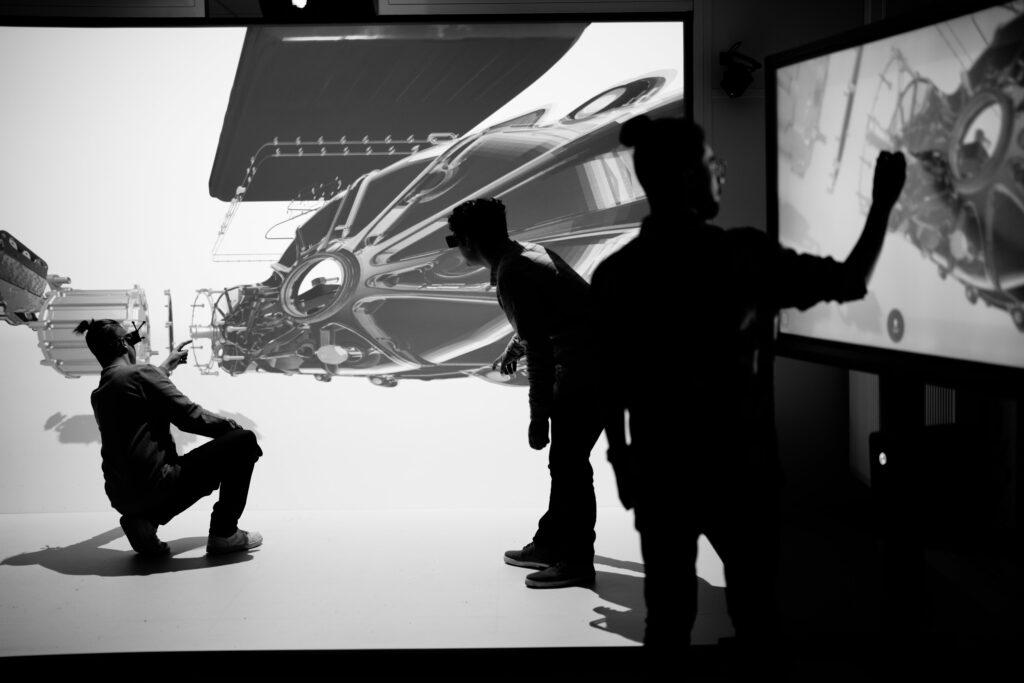
- Use of immersive technologies to replicate professional tasks or work environments

This is the rationale behind the European research project DIAMOND, which aims to push the boundaries of training for people from vulnerable socioeconomic backgrounds. DIAMOND offers an innovative and structured pathway based on proactive stages: “Envision, Engage, and Employ.” The project implements a variety of formats tailored to individual needs and labor market requirements, combining on-site, digital, and hybrid learning to maximize impact.
This classification allows for a better evaluation of formats based on their ability to:
- Ensure effective and lasting learning
- Develop both technical and behavioral skills
- Maintain participant engagement and attention
- Adapt to learners’ constraints and pace
Understanding these categories is essential for designing effective teaching methods, and is the first step before evaluating the success of each format, which we will detail now using Kirkpatrick’s model.
Measuring the impact of training: the contribution of the Kirkpatrick model
When exploring and comparing different learning formats (face-to-face, virtual, or hybrid), it is not enough to look only at the content or technology used. It is essential to understand how these formats actually influence learning and the practical application of the skills acquired. This is where Kirkpatrick’s model comes into its own: it provides a structured tool for evaluating the effectiveness of training at several levels, from the immediate experience of participants to the observable results in their professional environment.
Results: Finally, this level assesses the overall impact of the training, such as improved performance, achievement of organizational objectives, or operational efficiency.
Reaction: This first level assesses how participants perceived the training. Are they satisfied? Engaged? Do they find the content relevant? Understanding learners’ perceptions helps identify strengths and areas for immediate improvement.
Learning: The second level measures the actual acquisition of knowledge and skills. Changes in confidence, fluency, or understanding are all indicators of progress.
Behavior: At this stage, we focus on how participants apply what they have learned in their professional environment. The goal is to monitor the effective transfer of skills, whether in specific tasks, collaborative projects, or situations that closely resemble real-life work scenarios.
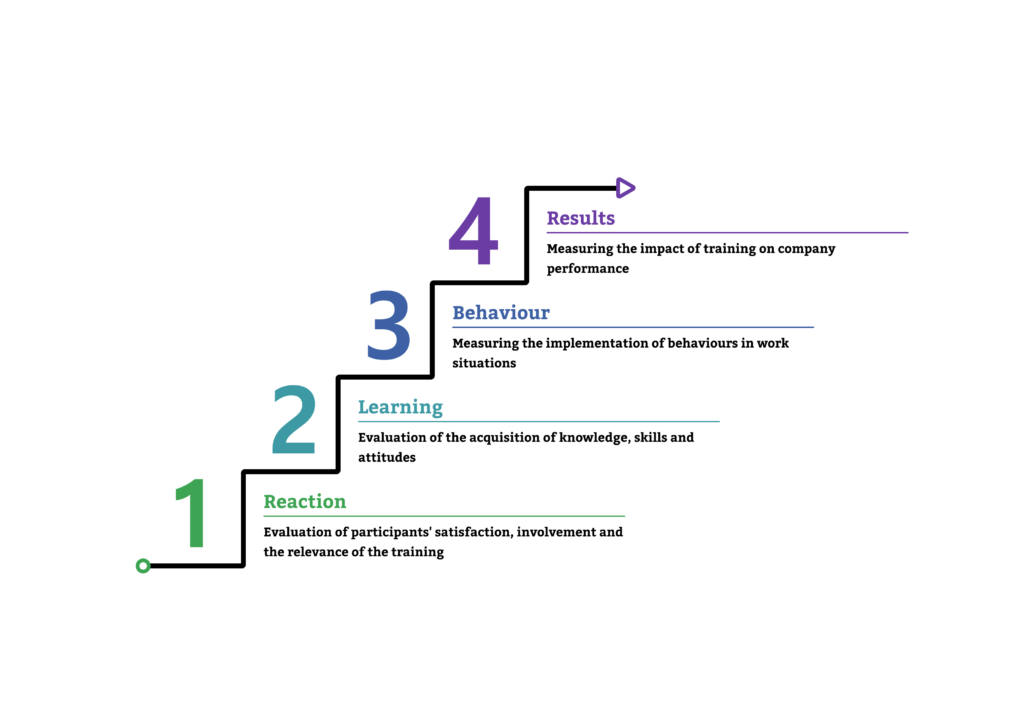
The graph associated with the model highlights that these four levels are interconnected. Participant satisfaction influences their learning, which in turn determines how their behavior evolves and ultimately impacts results. Therefore, these levels should not be considered in isolation, but rather as a continuum linking experience, competence, and performance.
This framework is particularly useful for comparing the effectiveness of different learning formats: face-to-face, virtual, or hybrid. For example, an online course may excel in terms of learning thanks to interactive and adaptive content, while a hybrid format may promote skills transfer through collaborative projects in real-life situations. Kirkpatrick’s model therefore provides a comprehensive and nuanced view, beyond simple satisfaction questionnaires, to guide pedagogical choices and optimize formats.
People at the heart of new learning formats
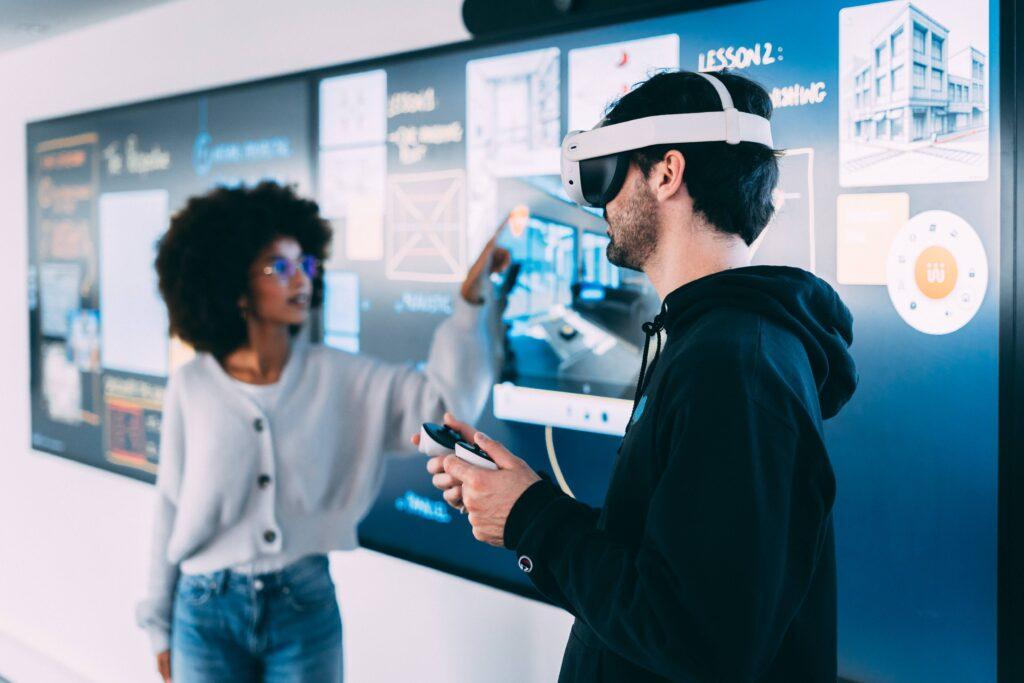
The effectiveness of a learning system is not limited to content and formats; it largely depends on the human factors that shape the learner’s experience. Modern instructional design seeks to balance autonomy, engagement, and interaction, while taking into account cognitive load and individual motivations.
Several key principles appear to be fundamental:
- Frequent and multimodal feedback: visual, haptic, or contextual feedback helps learners adjust their understanding and reinforce memorization. Integrating gamification principles can increase motivation and support progress.
- Controlled flexibility: allowing learners to manage their own pace promotes autonomy and cognitive regulation. Short, modular content, inspired by microlearning, provides natural breaks to consolidate knowledge and limit cognitive overload.
- Active engagement: Learning through practice, real-world projects, or case studies stimulates critical thinking and problem solving. Immersive technologies, such as virtual reality or simulated environments, reinforce this process by creating experiences that closely resemble the professional world.
- Safe social interactions: exchanges between peers enable the indirect acquisition of soft skills, such as collaboration, communication, and conflict management. Creating safe spaces encourages intellectual risk-taking and the co-construction of knowledge.
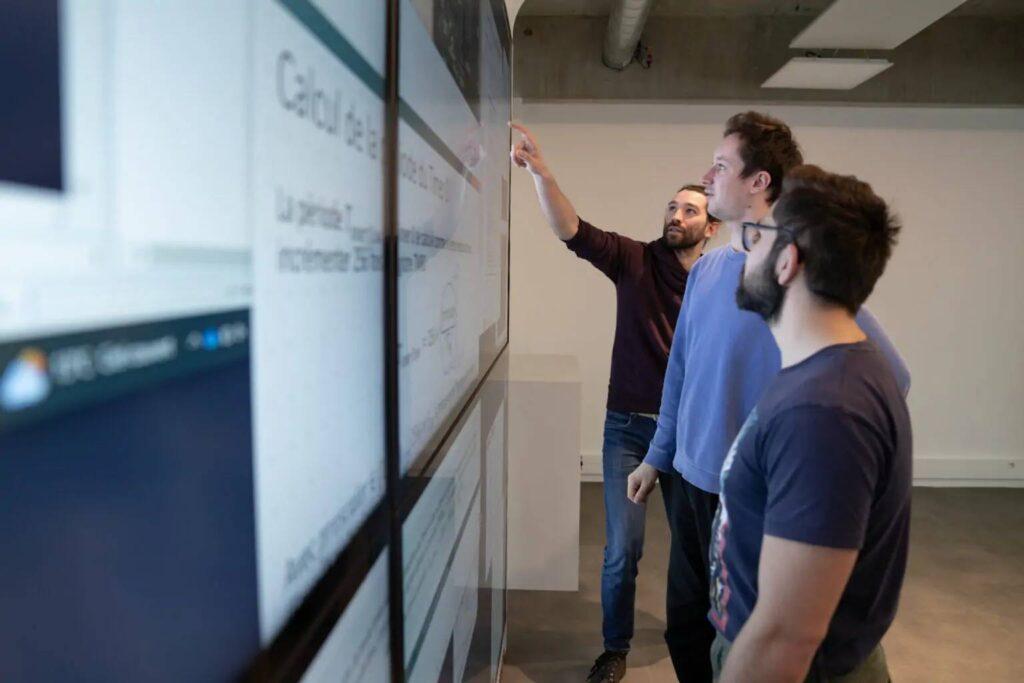
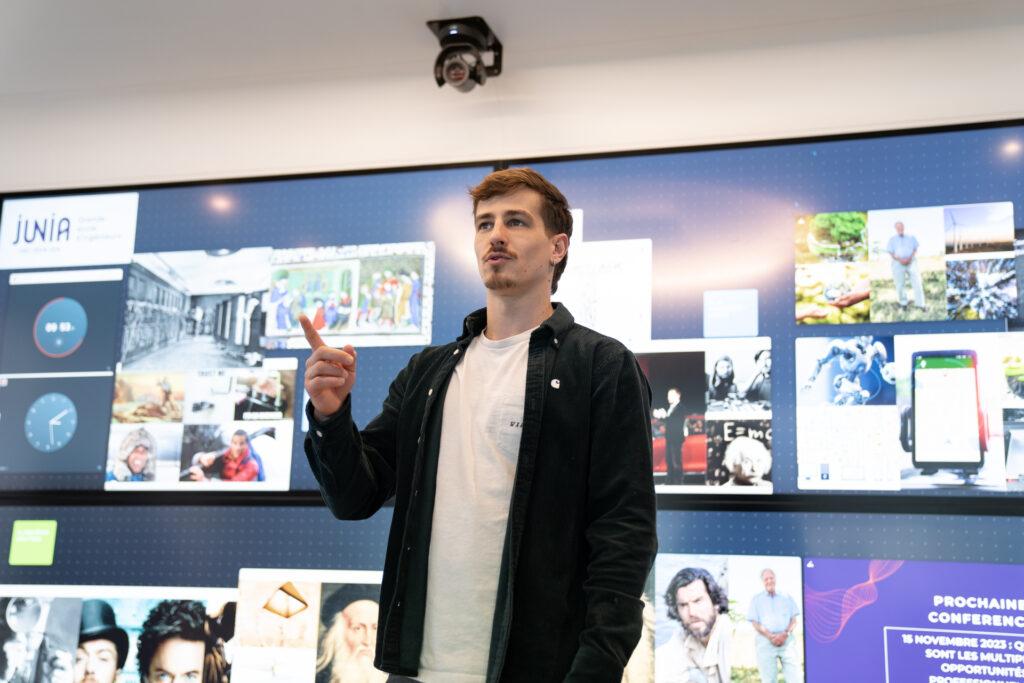
A concrete example of this approach can be found in the testimony of Junia, an engineering school. To meet the challenges of hybrid teaching and learner attention, the school has invested in immersive and collaborative technologies with our Studiiio. Three use cases perfectly illustrate the impact of these innovations:
- Interactive hybrid classes: thanks to interactive screens, cameras, and real-time screen sharing, teachers can demonstrate technical procedures to both in-person and remote students without losing the face-to-face experience.
- Engaging remote conferences: Studiiio makes video conferences more dynamic, allows questions to be answered in real time, and makes information more tangible, while offering an immersive experience for participants.
- Collaborative teaching meetings: teachers can co-create teaching tools, such as assessment grids, in a more efficient and engaging way than in a traditional setting, thanks to the combination of interactive spaces and collaborative tools.
Junia’s example shows that educational innovation is not limited to the use of technology: it is based on a human-centered approach that combines autonomy, interaction, and active engagement, and optimizes learning in a variety of contexts.
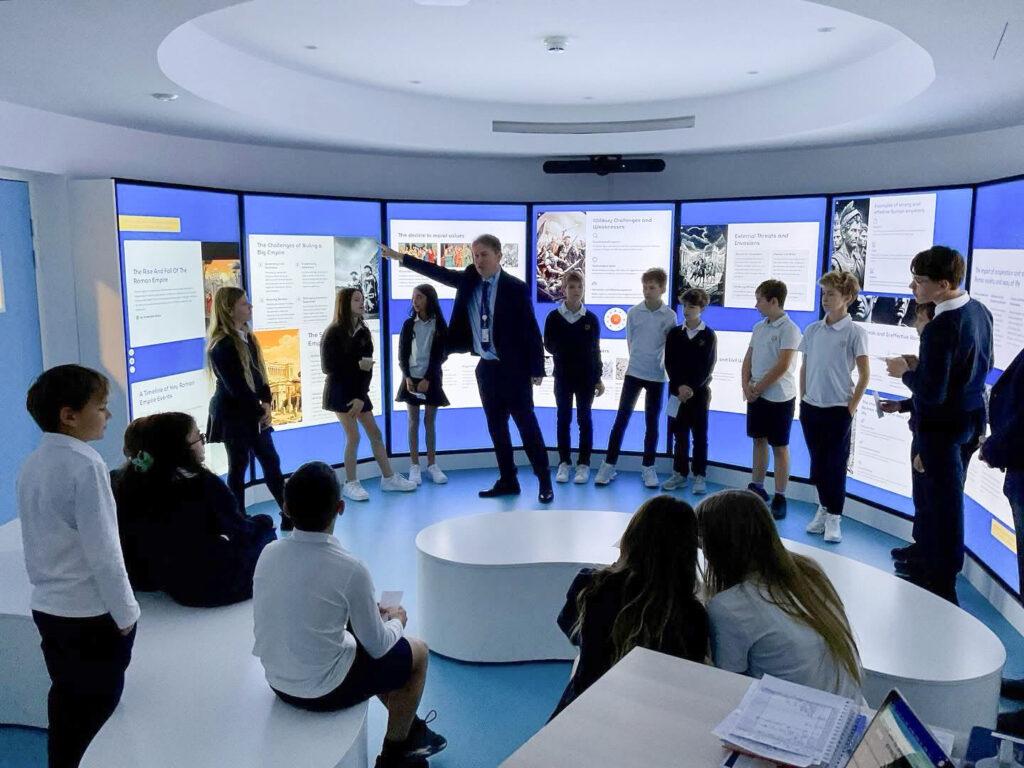
Another example of this approach can be found at the International School of Monaco. In line with its active teaching approach, the school has opted for an immersive and collaborative classroom equipped with the Shariiing solution. Teachers use the image wall and touch screens to offer visual, interactive, and collaborative activities that promote student autonomy and real-time feedback. This is a concrete way of embedding technology in the learning process from an early age.
Learning as an experience to be designed
Exploring learning formats means, above all, rethinking the experience offered to learners. Beyond face-to-face, virtual, or hybrid modalities, it is the ability to create engaging, tailored, and human-centered learning paths that makes the difference.
Today’s pedagogical and technological innovations offer powerful levers for transforming training, provided they remain focused on practical applications, skills, and employability. The challenge is therefore not to multiply formats, but to design relevant learning experiences that can sustainably support transformations in the world of work.
Would you like to learn more about learning formats? Would you like to make the most of immersive and collaborative technologies to finally enter the era of innovative pedagogy? Contact us.