Renault Group recently published an online article explaining the processes and tools used in the design of their vehicles. It provides feedback on a long history as a pioneer in the field of digital simulation, serving the user experience.
Renault and digital simulation: over 30 years of history
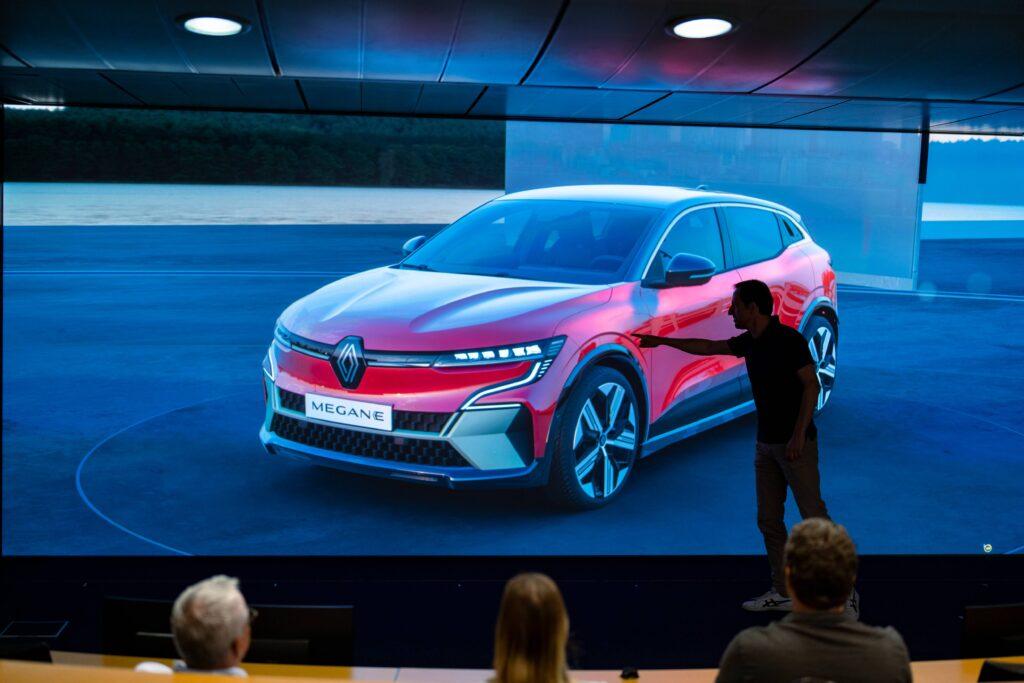
Great adventures are often stories of men and women. And in the case of digital simulation at Renault, some will not hesitate to recall the names of great engineers who have marked the history of digital simulation within the group. The most illustrious of these is undoubtedly Pierre Bézier, renowned for the curves that bear his name and are still used today in many CAD and DTP solutions. This invention revolutionized the field of digital design in the late 1960s and established a digital culture at the manufacturer.
Without going back that far, engineering teams have continued to work in the field for more than three decades, focusing on virtual reality, augmented reality, and digital simulation technologies.
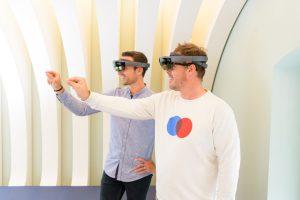
The article highlights a few achievements, accompanied by photos, starting with a CAVE, recently updated by our teams. While headsets facilitate the deployment of XR, multi-faceted immersive systems still have their place for uses requiring complex collaborative validation on a 1:1 scale.
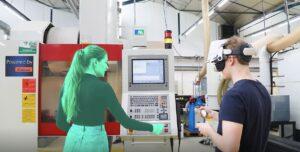
It is also possible to discover part of the XR Innov Lab. A place that provides businesses with innovative tools to democratize the use of XR and test solutions. The space, designed and fitted out by Immersion, was conceived as a box within a box, in order to create a warm and practical room, integrating numerous immersive and collaborative technologies inside an industrial hangar.
To conclude this panel, the article presents an illustration of the ROADS simulator. A titan of driving simulation weighing 90 tons. A cabin that allows a complete vehicle to be immersed in the simulation, perched on jacks that simulate the three axes of rotation, which are themselves installed on rails to move the whole assembly forward, backward, and sideways, reaching accelerations of 1G on each axis.
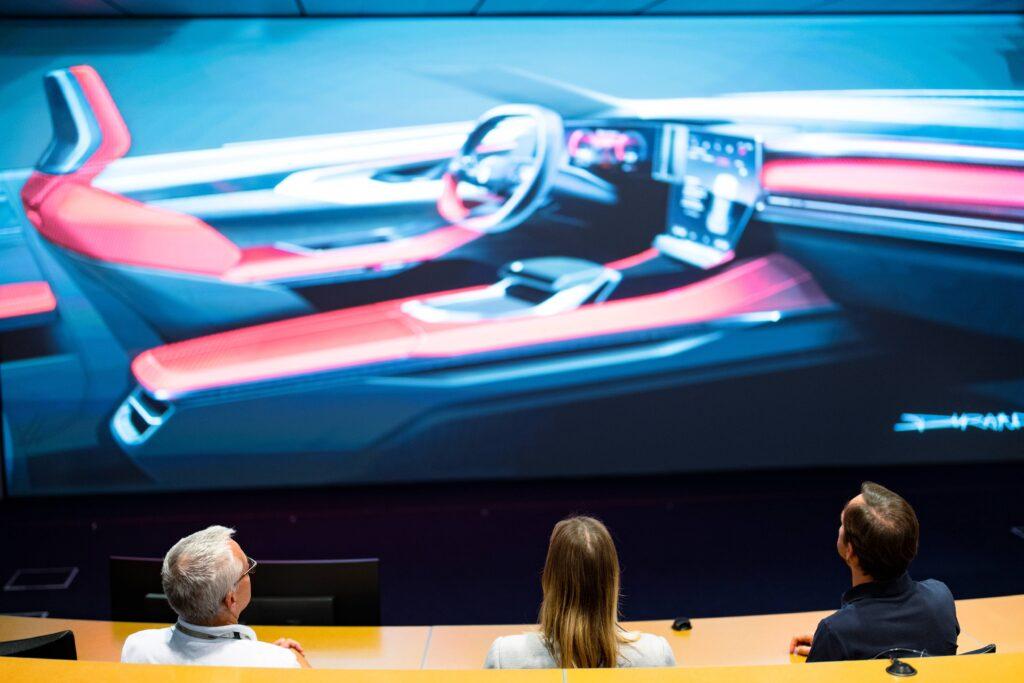
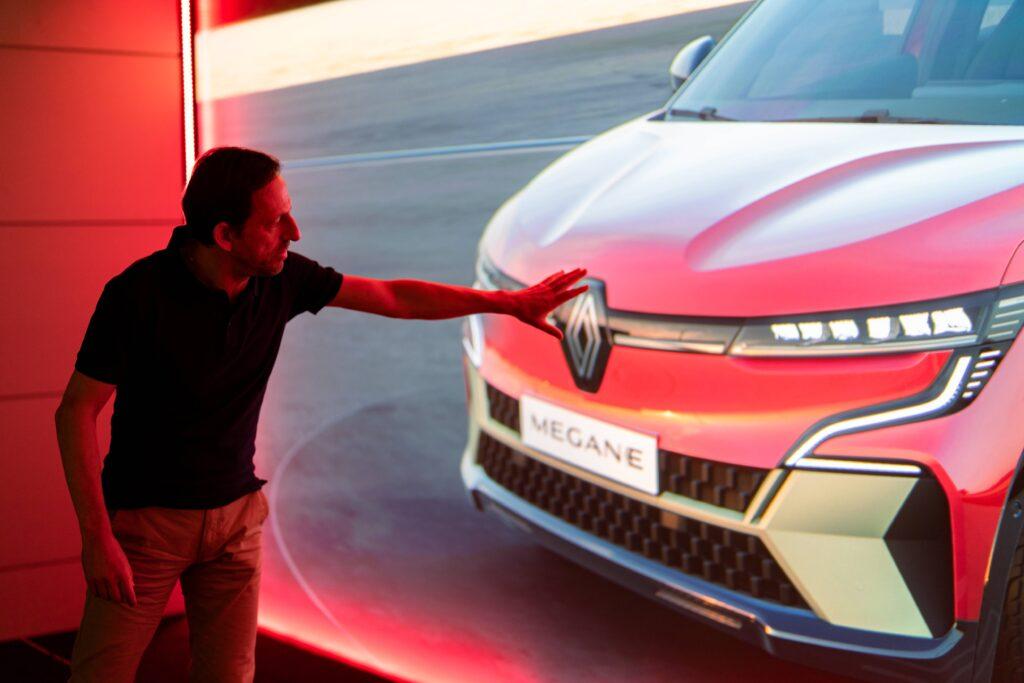
The arsenal of tools is complemented by other features, such as the Earl room dedicated to design, which we present in a use case.
Advanced and mastered uses
To paraphrase a famous tire manufacturer: power is nothing without control. And what comes across in this article is that behind these tools, as powerful as they may be, are teams of experts capable of harnessing their full potential and implementing them at the heart of business processes. Years of experience have enabled them to refine numerous uses.
In terms of collaboration, the creation of digital twins makes all the data from the virtual prototype of a vehicle under design accessible to engineering and design teams.
Immersive simulation, meanwhile, offers opportunities to evaluate vehicle behavior prior to physical testing and validate complex systems at a very early stage. A multitude of tests and scenarios can be carried out in this way: interactions, welcome sequences, communication between computers, etc.
A continuous loop is implemented between real data and digital simulations, allowing models to be refined iteratively.
Proven benefits
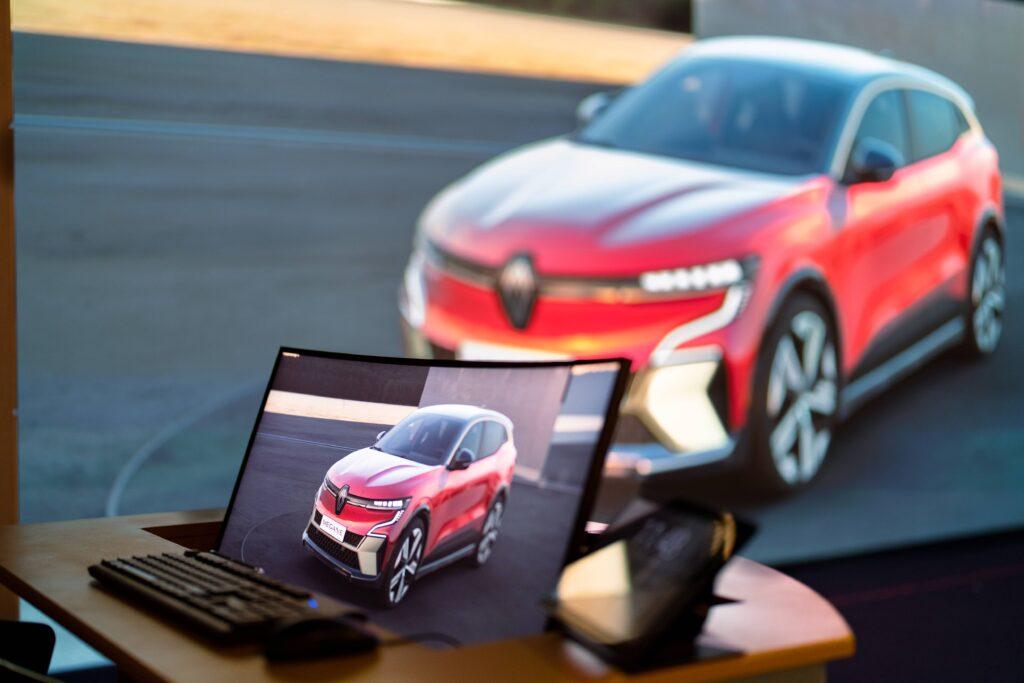
Capitalizing on 30 years of expertise to reap major benefits, these technologies enable development time to be halved by optimizing each stage, from design to validation. Teams can therefore iterate more quickly, reduce lead times, and anticipate necessary adjustments even before physical prototypes are produced.
Another key advantage is cost reduction, made possible by reducing the number of physical prototypes. By simulating complex scenarios and virtually validating component performance, Renault limits expenses related to manufacturing and repetitive testing.
Accelerating time to market is also a competitive advantage. By shortening development cycles, Renault can launch its innovations more quickly, thereby responding to customer expectations and technological developments. This agility is essential in a rapidly changing automotive sector.
Software quality is enhanced from the earliest stages of design. Thanks to exhaustive virtual testing, embedded software and electronic systems are validated upstream, reducing the risk of defects during final road testing.
Finally, digital simulation enables Renault to offer an optimized customer experience. By combining objective data with human feedback, Renault ensures that its vehicles perfectly meet user expectations in terms of both performance and comfort. This dual validation process guarantees increased customer satisfaction.
And the virtual world confronts reality
Although a large proportion of tests are simulated virtually, the article concludes that physical prototypes are still necessary, particularly to validate a vehicle’s behavior on the road, and that subjective human judgment cannot yet be replaced by digital tools. This conclusion provides some reassurance about the indispensable role played by humans and the importance of taking them into account when designing products intended for their use. These concerns and values are fully in line with those of Immersion and reinforce our pleasure in working on long-term projects with clients such as the Renault Group.
Whether you are a large corporation, mid-sized company, or small business, we can provide you with solutions tailored to your needs to accompany you on this journey that blends the virtual with the real.
Contact us to enjoy the proven benefits of immersive and collaborative simulation.